







Honoring 250 Years: Diversity, Resilience, and Chinese American Influence on Healthcare in the United States
As the United States approaches its 250th anniversary, the milestone offers an opportunity not only to celebrate its founding principles, but also to honor the many communities whose dedication, traditions, and resilience have helped shape the nation. The 250-year commemoration invites reflection on the meaning of culture, opportunity, and diversity. The American story has always been broadened by newcomers who brought skills, ideas, and traditions from around the world. Among them are Chinese Americans, whose history in the United States spans more than a century and a half and whose contributions continue to enrich American life within a vibrant multicultural landscape.
Over generations, Chinese Americans have transformed hardship into progress. Today, they are an integral part of every region of the country, participating fully in the nation’s democratic institutions while preserving cultural traditions that add richness to the American mosaic.
In addition to contributing to the development of the nation’s physical infrastructure, Chinese immigrants brought with them a sophisticated medical tradition rooted in thousands of years of observation, philosophy, and practice. At a time when Western medicine in the United States was still evolving, Chinese herbal remedies and acupuncture offered alternative ways of understanding health, emphasizing balance, prevention, and the interconnectedness of body systems rather than isolated symptoms. The growing acceptance of Traditional Chinese Medicine (TCM), including acupuncture and Chinese herbal medicine, reflects a broader American story - one in which cultural exchange strengthens the nation and expands the possibilities of wellness for all.
A turning point came in the 20th century, particularly after the 1970s. Increased cultural exchange between the United States and China sparked broader curiosity about alternative healthcare therapies. Acupuncture gained national attention when American journalists reported on its use for pain management during visits to China in the early 1970s. Soon after, scientific studies and clinical trials began to explore its efficacy, leading to its gradual acceptance within the U.S. healthcare system. Today, acupuncture is widely recognized as a complementary treatment for a variety of health conditions. It is practiced in hospitals, Veterans Health Administration facilities, integrative medicine clinics, and private practices across the country.
Similarly, Chinese herbal medicine, once confined largely to ethnic enclaves, has expanded into a regulated and increasingly researched field. TCM practitioners in the United States undergo specialized training that integrates traditional knowledge with modern safety standards, quality control, and collaboration with other healthcare providers. Most states now license acupuncturists, reflecting a shift from skepticism to structured inclusion. For many Americans, TCM represents not an alternative to modern medicine, but a complementary resource within a broader health strategy.
The integration of TCM into American life also reflects broader themes central to the nation’s 250-year story. Integrative medicine - combining conventional Western approaches with evidence-based traditional practices - continues to grow. Research into acupuncture and herbal medicine is expanding, supported by universities, medical centers, and federal agencies. Patients are increasingly seeking care that aligns with their cultural values and personal beliefs. The United States has always been shaped by the exchange of viewpoints across cultures, where innovation often emerges at the intersections. The growing acceptance of acupuncture and Chinese herbal medicine is a reminder that knowledge is not confined by borders; it evolves through dialogue and through a willingness to learn, adapt, innovate while embracing valuable perspectives regardless of their origin.
As the United States marks a quarter millennium, this milestone is more than a remembrance of the past. Celebrating 250 years is not only about honoring founding documents or political milestones; it is also about recognizing the countless contributions that have shaped the nation’s identity and renewing a commitment to a future in which every community sees itself reflected in the national story.
Looking ahead, the role of Chinese American communities offers a compelling vision for the future. The legacy of TCM in the United States is more than a medical narrative. It reflects a nation that is constantly evolving, enriched by diversity, and strengthened by the adaptation of traditions from around the world. It points toward a healthcare system that values multiple ways of knowing, respects cultural heritage, and prioritizes whole-person well-being. It also underscores a broader truth: the strength of the American mosaic lies not in uniformity, but in diversity. This is a legacy worthy of celebration, and a future worthy of building together.
-----------------------------------
Author:
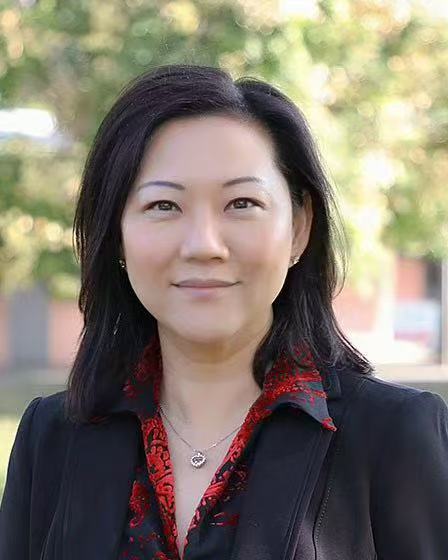
Jenny Yu, DACM, LAc.
Dean, College of Eastern Medicine
Southern California University of Health Sciences
Jenny Yu is the Academic Dean of the Eastern Medicine Department at Southern California University of Health Sciences (SCU). Since joining the SCU faculty in 2001, she has served in several leadership roles, including Associate Professor, Chair of Clinical Education, and Director of the University Health Center at SCU Health. She is also a respected faculty member at the Keck School of Medicine of the University of Southern California (USC).
Jenny believes that “excellence in healthcare begins with excellence in education” and is committed to advancing the recognition and integration of Traditional Chinese Medicine (TCM) in the United States by educating the next generation of practitioners. Under her academic leadership, SCU became the first university in the United States to launch an entry-level Doctorate in Acupuncture and Chinese Medicine. She firmly believes that the continued growth and acceptance of TCM, together with integrative healthcare approaches, will expand access to effective care and improve the lives of more people in need.